
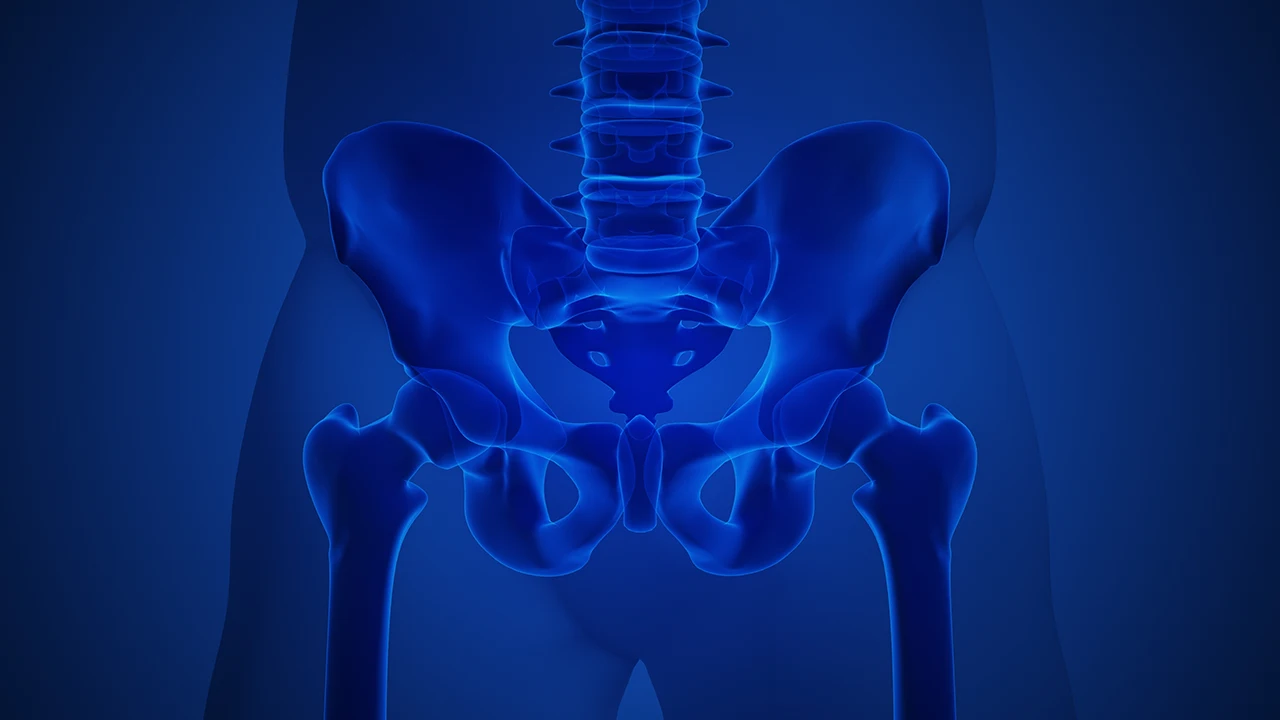
A sacroiliac joint injection delivers steroid medication and local anesthetic directly into the SI joint — where the spine meets the pelvis — to diagnose and treat pain in the lower back, buttock, and hip. The injection both confirms the SI joint as the pain source and reduces the inflammation causing symptoms, with relief that can last from several weeks to several months.
What Are Sacroiliac Joint Injections?
A sacroiliac joint injection is a minimally invasive procedure used in interventional pain management to diagnose and treat pain originating in the sacroiliac joint. It delivers a combination of corticosteroid and local anesthetic directly into or around the joint, reducing inflammation while confirming whether the SI joint is the actual source of pain.
The sacroiliac joints are a pair of joints that connect the sacrum — the triangular bone at the base of the spine — to the ilium, the large bones of the pelvis. You have one on each side of your lower back, just above the buttocks. These joints don’t move much, but they absorb and transfer significant load between your upper body and legs, which makes them vulnerable to inflammation, injury, and wear.
When an SI joint becomes dysfunctional, it can produce pain that’s frequently mistaken for other conditions. SI joint pain often mimics sciatica, lumbar disc problems, or hip arthritis, which is part of why it’s so commonly underdiagnosed. The injection serves a dual role: the local anesthetic provides immediate diagnostic feedback (if pain disappears, the SI joint is confirmed as the source), while the steroid delivers longer-lasting anti-inflammatory relief.
Because the procedure both diagnoses and treats, it’s one of the more efficient tools available for addressing stubborn lower back and buttock pain that hasn’t responded to conservative care.
What Conditions Do Sacroiliac Joint Injections Treat?
Sacroiliac joint injections address pain stemming from dysfunction, inflammation, or degeneration of the SI joint. The injection is most effective when symptoms point clearly toward the joint as the source.
Conditions commonly treated include:
- Sacroiliac joint dysfunction — abnormal movement (too much or too little) in the joint
- Sacroiliitis — inflammation of the SI joint, sometimes linked to inflammatory arthritis
- SI joint arthritis — age-related or wear-related degeneration of the joint
- Post-traumatic SI joint pain — following a fall, car accident, or other injury
- Pregnancy-related SI joint pain — from the ligament loosening and load changes of pregnancy
- SI joint pain following lumbar fusion surgery — where altered spine mechanics stress the joint
SI joint pain typically presents as pain in the lower back and buttock, often on one side, that may radiate into the hip, groin, or upper thigh. It rarely extends below the knee, which helps distinguish it from nerve-related pain like sciatica. Pain often worsens with prolonged sitting, standing, climbing stairs, or transitioning from sitting to standing.
Because these symptoms overlap heavily with other lower back conditions, the diagnostic component of the injection is especially valuable — it provides clarity that physical examination and imaging alone often cannot.
How Are Sacroiliac Joint Injections Performed?
A sacroiliac joint injection is an outpatient procedure that typically takes 15 to 30 minutes. Imaging guidance — usually fluoroscopy (real-time X-ray) — is used throughout to ensure the medication reaches the joint precisely.
- Preparation. You’ll lie face down on a procedure table. The skin over the injection site is cleaned with antiseptic solution, and a small amount of local anesthetic numbs the area to minimize discomfort during the injection.
- Imaging guidance. Using fluoroscopy, the physician identifies the sacroiliac joint and guides the needle to the correct position. Contrast dye is often injected first to confirm the needle is properly placed within the joint before the medication is delivered.
- Injection. A combination of corticosteroid and local anesthetic is injected into or around the joint. You may feel pressure or a brief fullness as the medication enters the joint space.
- Recovery and observation. You’ll rest in a recovery area for a short period so staff can monitor for any immediate reactions. Most patients return home the same day and can drive themselves unless sedation was used.
- Pain tracking. In the hours following the procedure, you’ll note how your pain responds. Significant relief during the window the anesthetic is active helps confirm the SI joint as your pain source.
When both SI joints are injected in the same session — which is appropriate when pain affects both sides — the procedure is called a bilateral sacroiliac joint injection. Treating one side only is a unilateral injection, used when symptoms are clearly one-sided.
Are Sacroiliac Joint Injections Painful?
Most patients tolerate sacroiliac joint injections well. The skin and deeper tissues are numbed with local anesthetic before the needle reaches the joint, so the most common sensations during the procedure are pressure and brief fullness rather than sharp pain.
Some patients feel a momentary ache or cramping as the medication fills the joint space, but this typically passes within seconds. The entire injection is brief, and imaging guidance keeps the needle precisely on target, which minimizes tissue disruption along the way.
Mild soreness at the injection site for a day or two afterward is normal and expected. This post-procedure tenderness responds well to ice and over-the-counter pain relievers and shouldn’t be confused with the deeper joint pain the injection is meant to treat.
For patients who feel significant anxiety about the procedure, some providers offer mild sedation, though the brevity of the injection means most people don’t need it.
How Long Do Sacroiliac Joint Injections Last?
The duration of relief from sacroiliac joint injections varies considerably between patients. For those who respond well, relief commonly lasts several weeks to several months. Some patients experience benefit for six months or longer, while others find the relief shorter-lived.
The two components of the injection work on different timelines. The local anesthetic provides immediate relief that wears off within hours — this early window is primarily diagnostic. The corticosteroid takes effect more gradually, typically over two to seven days, and provides the sustained anti-inflammatory benefit that accounts for the weeks-to-months duration.
Several factors influence how long relief lasts: the underlying cause and severity of the SI joint problem, activity level, whether physical therapy is pursued alongside the injection, and individual response to corticosteroids. Injections tend to produce the most durable results when combined with a broader treatment plan that addresses the mechanical factors stressing the joint, rather than used as a standalone fix.
If relief fades after a period of good benefit, a repeat injection can often restore it. If relief is consistently short-lived despite good initial response, that pattern may point toward a longer-lasting intervention.
What Are the Side Effects of Sacroiliac Joint Injections?
Sacroiliac joint injections are considered very safe when performed by experienced pain specialists using imaging guidance. Serious complications are rare, and most side effects are mild and temporary.
Common side effects include:
- Soreness at the injection site for 24 to 48 hours
- Temporary increase in pain before the steroid takes effect
- Facial flushing for a day or two
- Temporary elevation of blood sugar (relevant for patients with diabetes)
- Short-term sleep disruption from the steroid
Less common side effects include headache, mild bruising at the injection site, and temporary water retention. Serious complications — infection, significant bleeding, allergic reaction, or nerve irritation — are very rare with proper sterile technique and imaging guidance.
Patients taking blood thinners may need to adjust their medication before the procedure to reduce bleeding risk. Patients with diabetes should monitor blood sugar closely for a few days afterward, since corticosteroids can cause a temporary spike. Discussing all current medications and health conditions with the pain specialist before the procedure ensures appropriate precautions.
How Often Can You Get Sacroiliac Joint Injections?
Most pain specialists limit corticosteroid injections to no more than three to four in the same joint per year, with a minimum spacing of several weeks to a few months between injections. This guideline exists because repeated steroid exposure carries cumulative risks, including potential weakening of nearby connective tissue and effects on bone density over time.
The exact frequency depends on how well each injection works and how long the relief lasts. A patient who gets several months of relief from each injection can comfortably stay within the recommended annual limit. A patient who needs injections more frequently than the guideline allows is usually a signal that the underlying problem needs a different approach.
When injections provide good but temporary relief that doesn’t last long enough to manage pain within the safe frequency limits, pain specialists typically consider longer-lasting options such as radiofrequency ablation of the nerves supplying the SI joint. The goal is always to achieve durable pain control while keeping total steroid exposure as low as reasonably possible.
How Much Do Sacroiliac Joint Injections Cost?
The cost of sacroiliac joint injections varies based on several factors:
| Factor | Impact on Cost |
|---|---|
| Unilateral vs. bilateral | Treating both joints costs more than one |
| Facility type | Hospital-based procedures cost more than outpatient clinic procedures |
| Imaging guidance | Fluoroscopy or CT guidance adds to the procedure cost |
| Geographic location | Regional cost variation is significant |
| Insurance coverage | Coverage level determines out-of-pocket expense |
Most major insurance plans, including Medicare, cover sacroiliac joint injections when medical necessity is documented. Insurance authorization typically requires evidence that conservative treatments — physical therapy, medications, activity modification — have not provided adequate relief.
For patients without insurance coverage or with high-deductible plans, out-of-pocket costs can vary widely depending on the factors above. Contacting the pain management clinic directly for a personalized estimate is the most reliable way to understand costs before scheduling.
Sacroiliac Joint Injection vs. Facet Joint Injection
Both procedures treat lower back pain with steroid injections, but they target different structures and address different pain sources. Confusing the two is common, since SI joint pain and facet joint pain can feel similar.
| Factor | Sacroiliac Joint Injection | Facet Joint Injection |
|---|---|---|
| Target structure | Sacroiliac joint (spine-to-pelvis) | Facet joints (between vertebrae) |
| Typical pain location | Lower back, buttock, hip, groin | Localized back or neck pain |
| Pain pattern | Often one-sided, rarely below the knee | Worsens with bending backward or twisting |
| What it treats | SI joint dysfunction, sacroiliitis | Facet joint arthritis and inflammation |
| Diagnostic value | Confirms SI joint as pain source | Confirms facet joints as pain source |
The symptoms overlap enough that a careful physical examination — and sometimes a diagnostic injection itself — is what ultimately distinguishes the two. A pain specialist evaluates your specific pain pattern, what makes it better or worse, and imaging findings to determine which joint is responsible and which injection is appropriate. In some cases, facet joint injections and SI joint injections are both used at different points to systematically identify the true source of pain.
When Sacroiliac Joint Injections Point Toward Longer-Term Treatment
For patients whose SI joint pain responds well to injections but returns faster than the safe injection schedule allows, the diagnostic clarity the injection provides opens the door to longer-lasting options. Radiofrequency ablation can target the small sensory nerves supplying the SI joint, disrupting pain signals for six months to two years rather than weeks to months. A successful SI joint injection — one that confirms the joint as the pain source and provides meaningful relief — is often the step that establishes a patient as a strong candidate for ablation.
Take the Next Step Toward Relief
Chronic lower back and buttock pain that hasn’t responded to conservative care deserves a precise diagnosis and a targeted treatment plan. Sacroiliac joint injections offer both — confirming the source of your pain while delivering the anti-inflammatory relief that can restore your ability to sit, stand, and move comfortably.
Access Pain Solutions provides sacroiliac joint injections and the full range of interventional pain management at five locations across northeastern Oklahoma — Tulsa, Sand Springs, Muskogee, Okmulgee, and Vinita. Our experienced pain specialists use precise imaging guidance and evidence-based protocols to identify your pain source and build a treatment plan tailored to your situation. To schedule a consultation, contact the Access Pain Solutions location nearest you.
Frequently Asked Questions About Sacroiliac Joint Injections
Is a Sacroiliac Joint Injection the Same as an Epidural?
No — a sacroiliac joint injection and an epidural target different structures. A sacroiliac joint injection delivers medication into the SI joint where the spine meets the pelvis, treating pain from SI joint dysfunction. An epidural steroid injection delivers medication into the epidural space around the spinal cord to calm inflamed nerve roots, typically treating radiating pain from a herniated disc or spinal stenosis. Different location, different target, different type of pain.
Are Bilateral Sacroiliac Joint Injections Done in One Session?
Yes. When pain affects both sacroiliac joints, both can be injected in a single session — this is called a bilateral sacroiliac joint injection. When symptoms are clearly one-sided, only the affected joint is treated, which is a unilateral injection.
How Should I Prepare for a Sacroiliac Joint Injection?
Preparation for a sacroiliac joint injection is straightforward. Tell your pain specialist about all medications you take, since blood thinners may need to be paused beforehand to reduce bleeding risk. Wear comfortable, loose clothing, and arrange for someone to drive you home if you’ll be receiving sedation. Most patients can eat normally and take their usual medications unless specifically instructed otherwise.
What Should I Avoid After a Sacroiliac Joint Injection?
After a sacroiliac joint injection, avoid strenuous activity, heavy lifting, and high-impact exercise for the first day or two while any soreness settles. Taking it easy the day of the procedure and resuming normal activity gradually gives the joint time to respond. Once initial soreness subsides, a pain specialist may recommend starting or continuing physical therapy to help extend the injection’s benefit.
How Soon Will I Feel Relief After a Sacroiliac Joint Injection?
The local anesthetic in a sacroiliac joint injection can provide noticeable relief within hours, though this early relief is temporary and primarily diagnostic. The corticosteroid takes effect more gradually, with most patients noticing sustained improvement within two to seven days as inflammation subsides.
What Is the Success Rate of Sacroiliac Joint Injections?
Sacroiliac joint injections provide meaningful relief for a majority of appropriately selected patients — those whose pain has been traced specifically to the SI joint. Results are strongest when the injection both confirms the joint as the pain source and treats it, and when it’s paired with physical therapy that addresses the mechanics stressing the joint. Patients whose relief fades quickly may be candidates for longer-lasting options like radiofrequency ablation.